How to choose a dog collar
Every dog needs a collar. In the UK it's the law for your dog to wear a collar with an ID tag carrying your name and address whenever they're out in public (the Control of Dogs Order 1992), even if you walk them on a harness. So the collar is the one thing every dog owner buys, and the right one is comfortable enough to wear all day, strong enough for your dog, and easy for you to put on.
Three things decide it: your dog's size and strength, their coat and skin, and when you walk them.
Dog collars by type
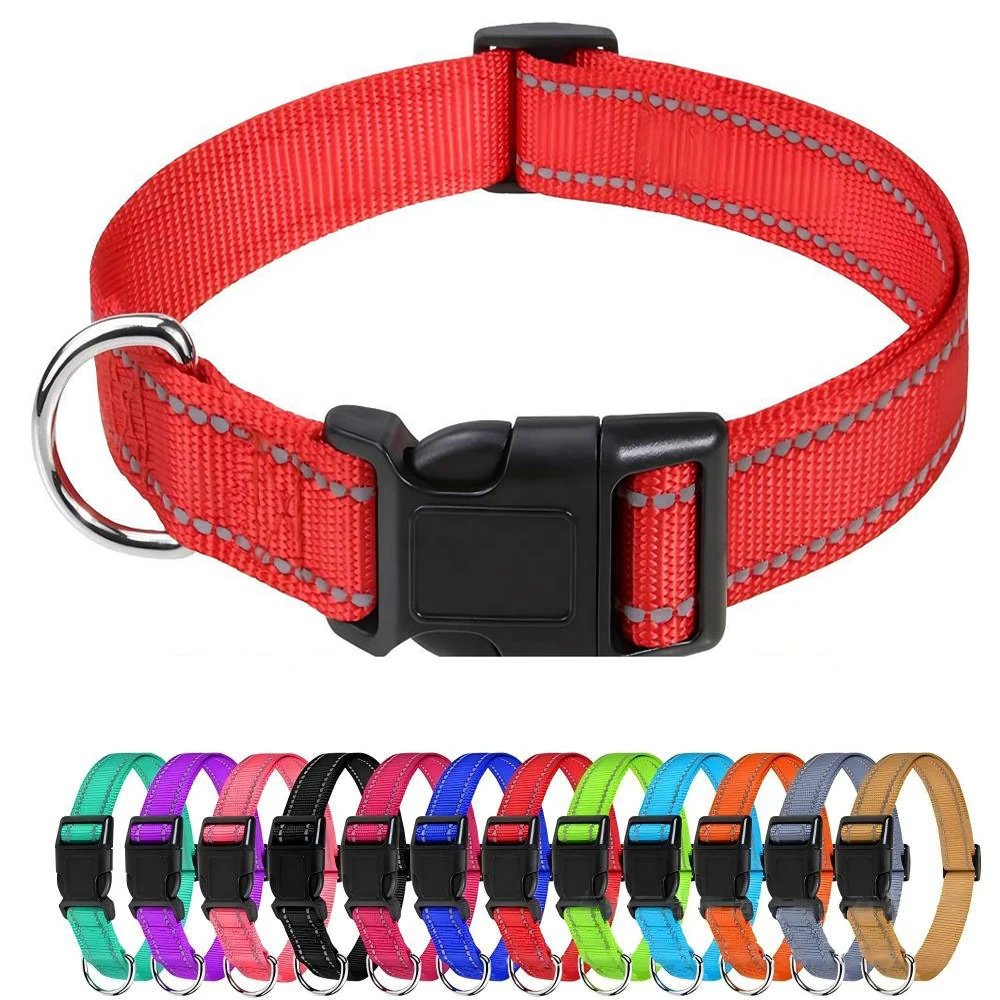
Nylon collars
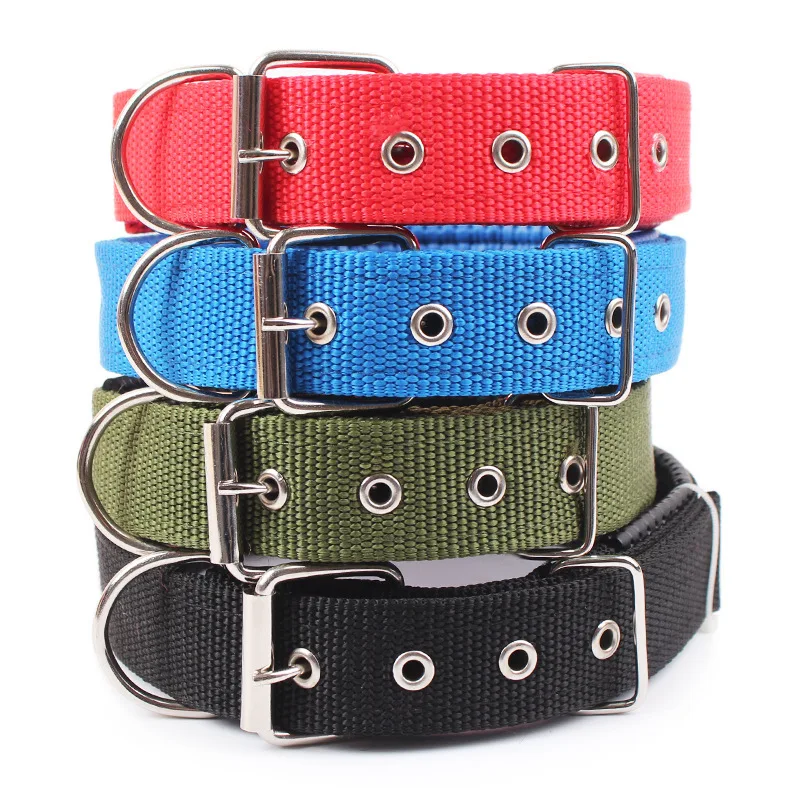
The everyday collar. Nylon is light, strong, quick to dry and easy to wash, and it comes in every colour. Our solid colour nylon collars suit most dogs, from puppies to large breeds, and start from a few pounds.
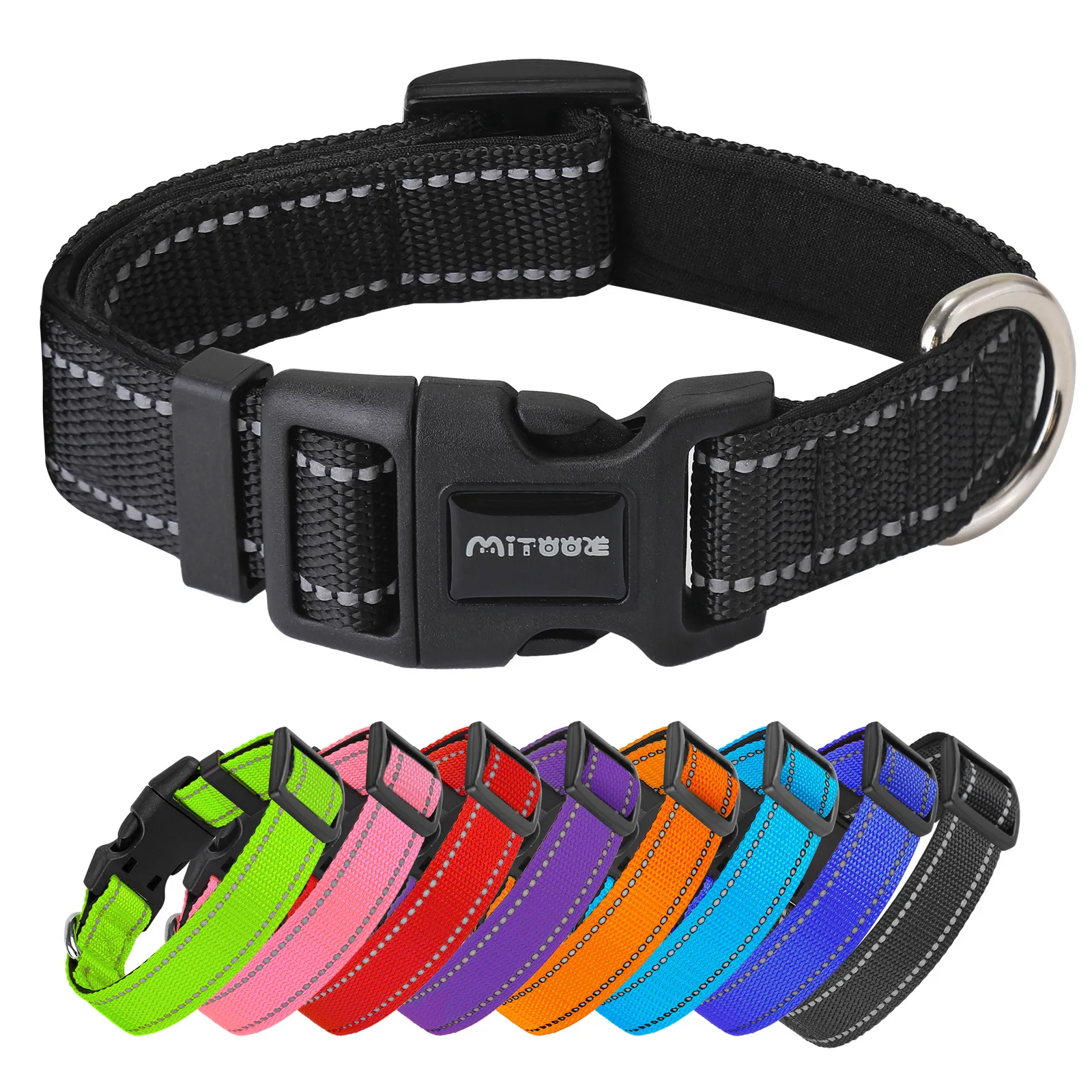
Padded collars
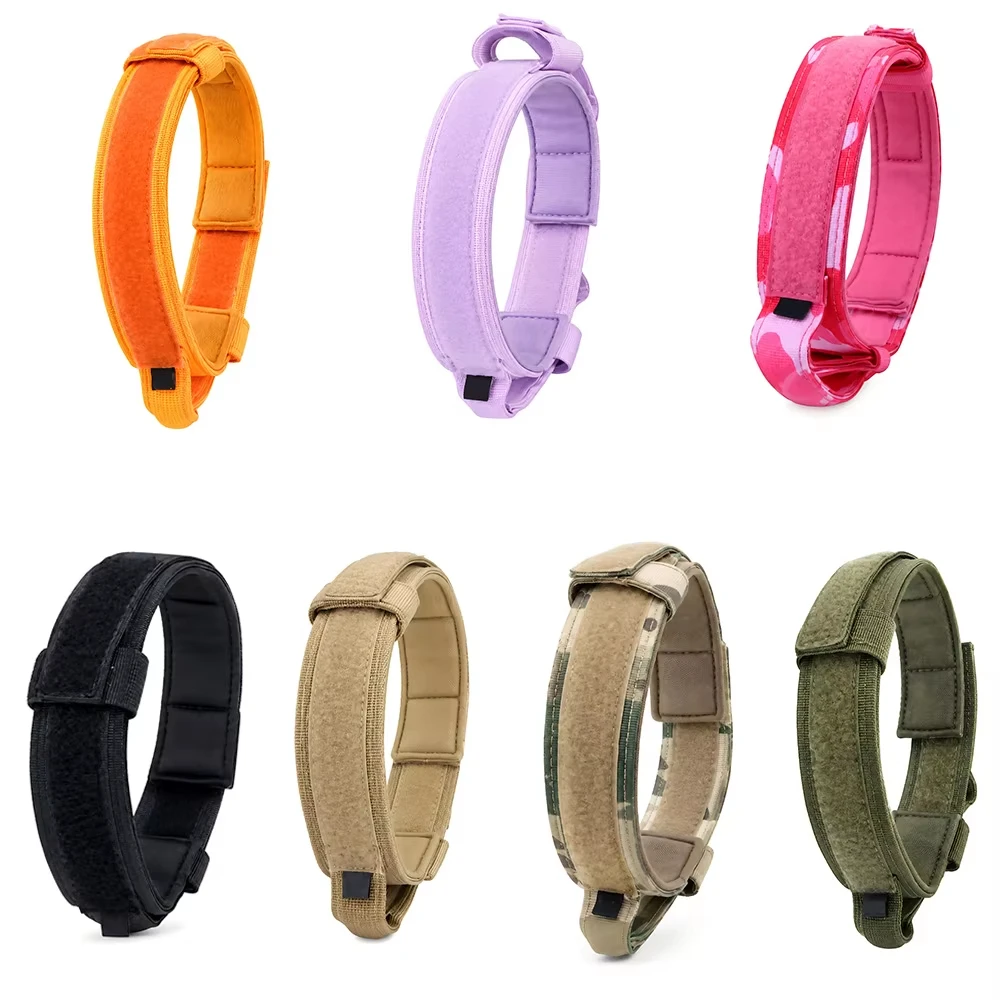
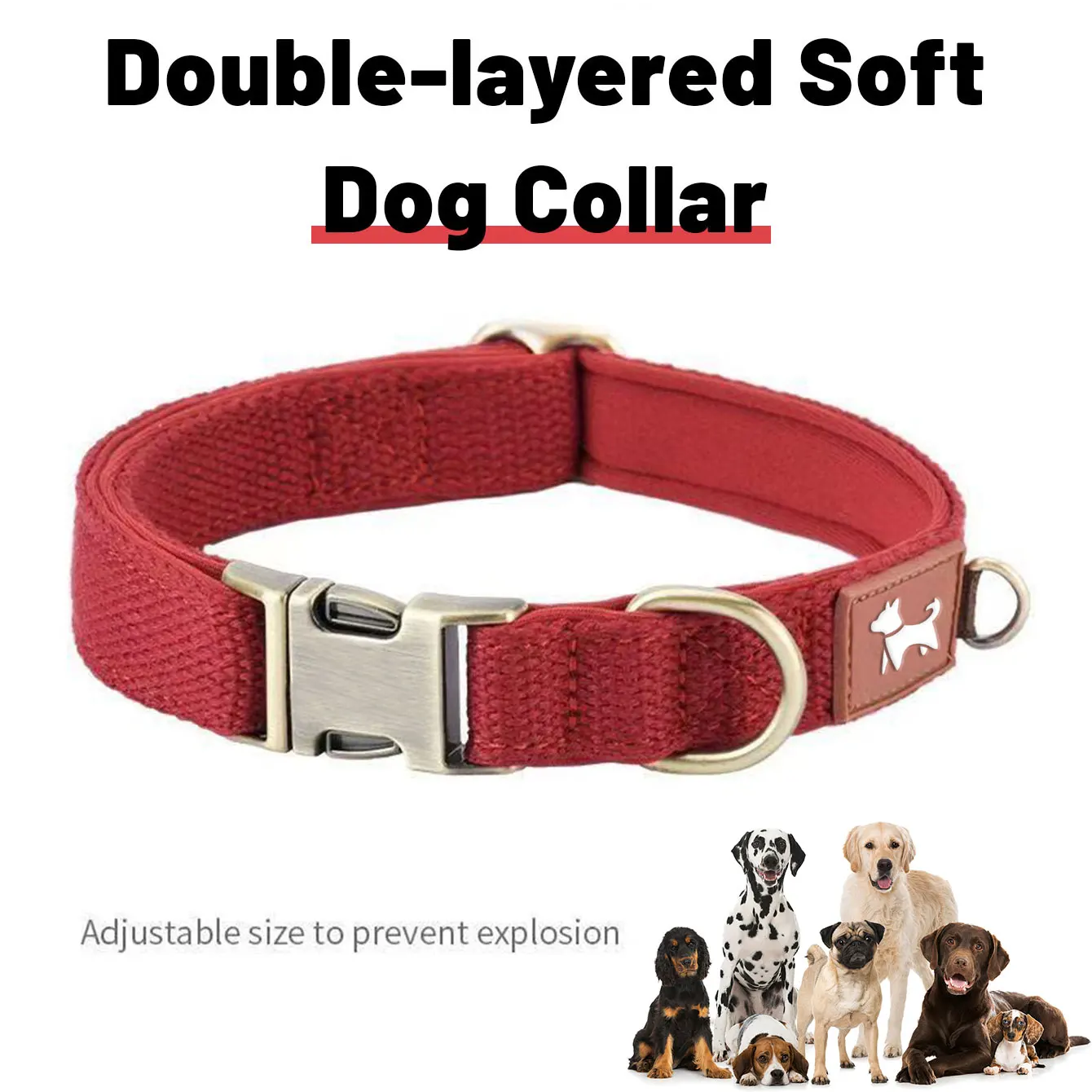
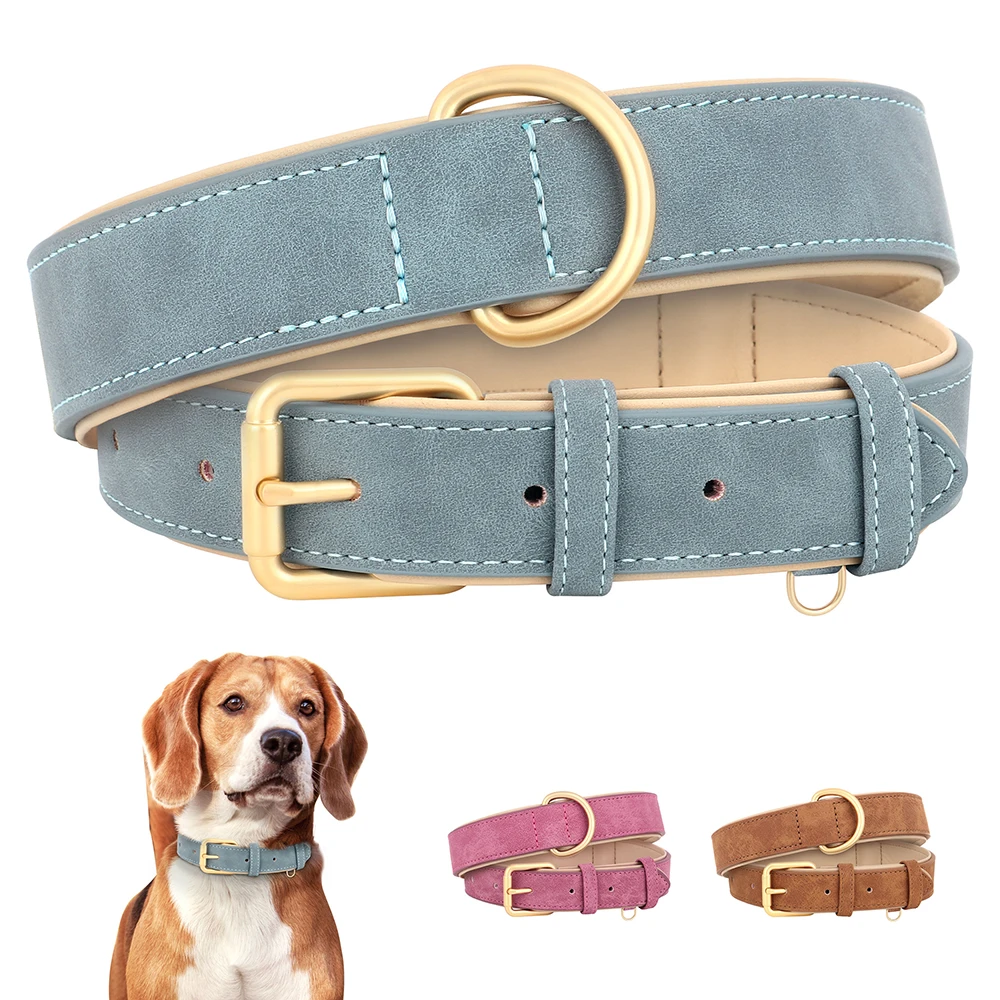
A padded collar has a soft lining, often neoprene, where it sits against the neck. It's kinder on short-coated dogs and dogs with sensitive skin, and it doesn't rub when worn all day. Several of ours are reflective as well.
Leather collars
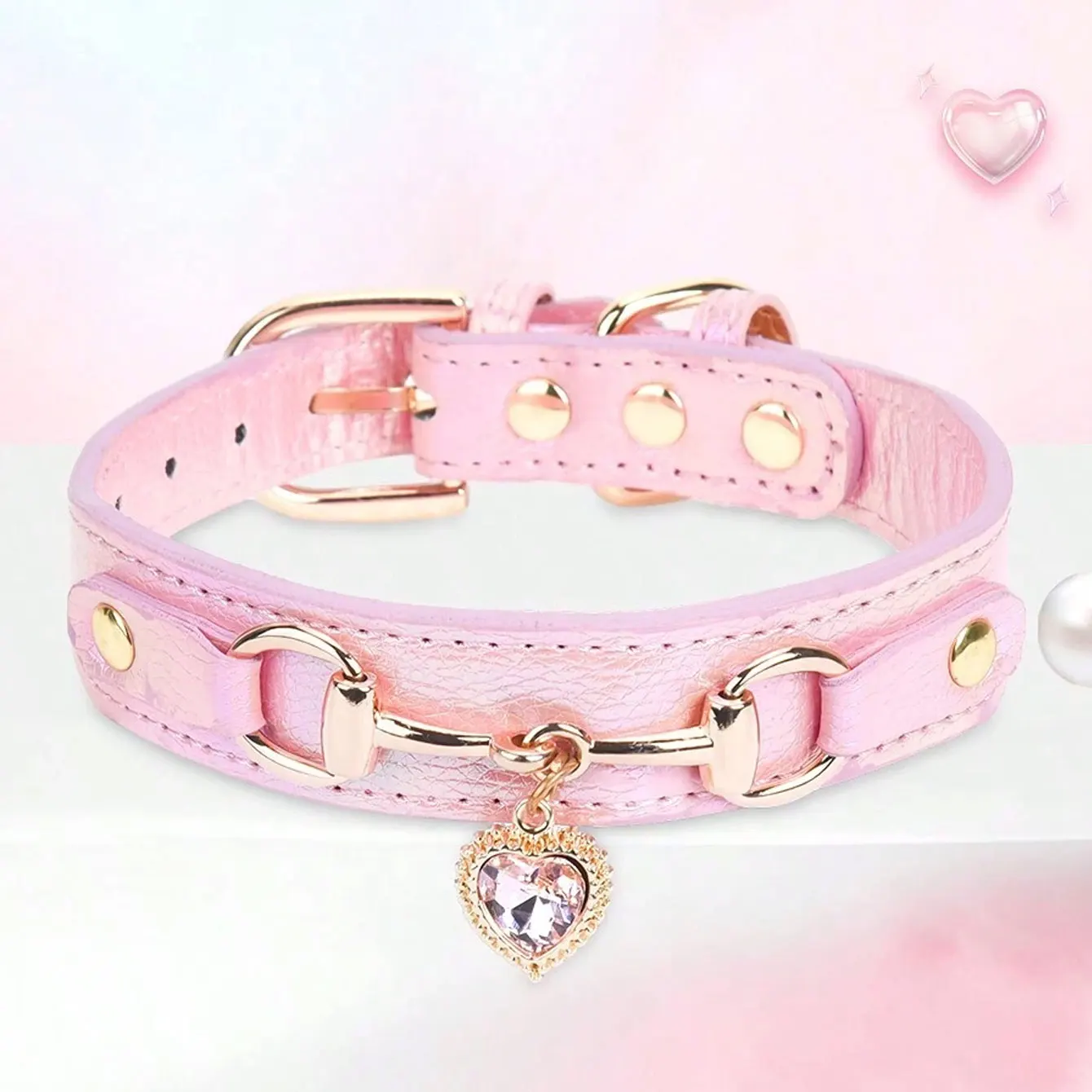
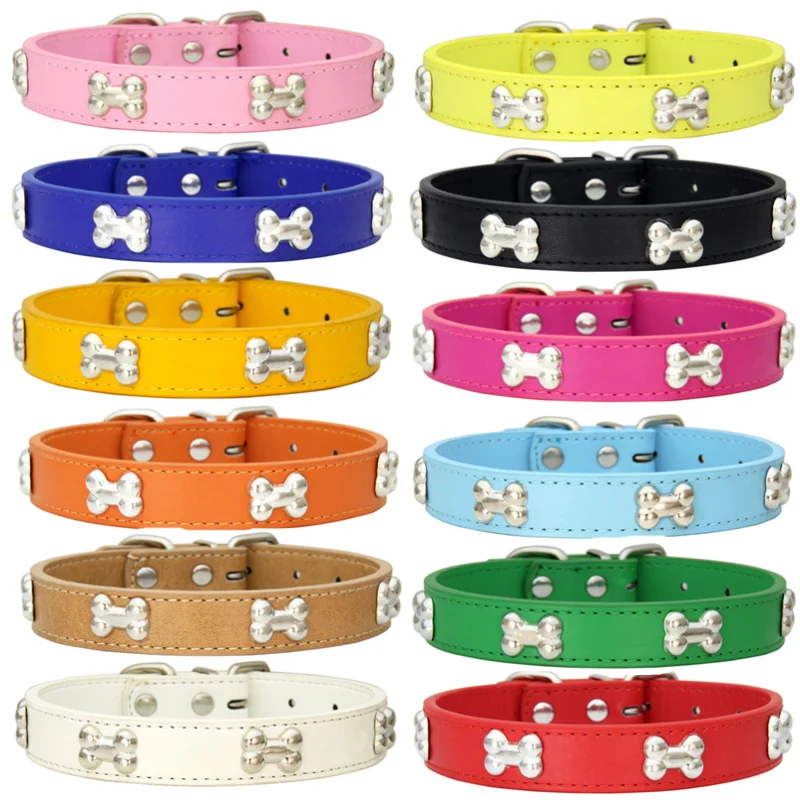
Leather and PU leather collars look smart, soften with wear and suit dogs that wear a collar at home as well as out. Ours range from soft padded leather to decorated collars with gemstones and bone shapes.
Reflective and LED collars
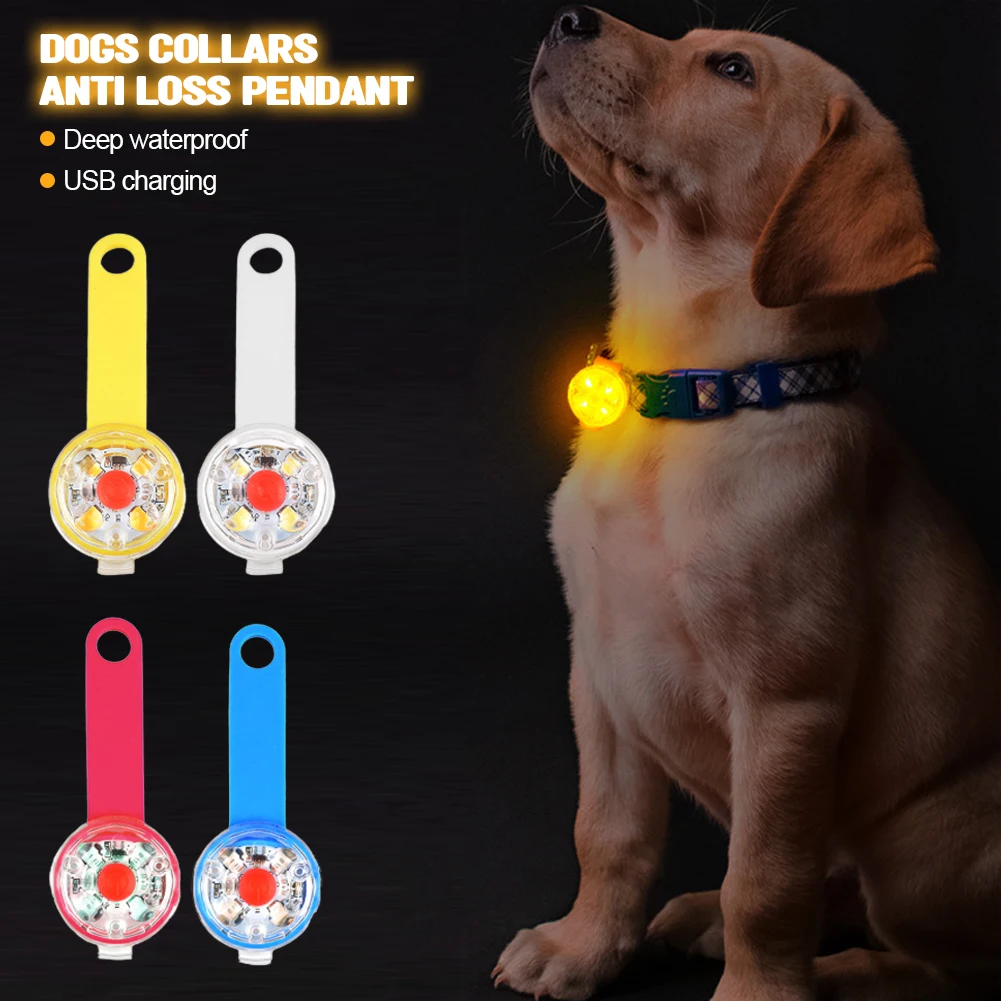
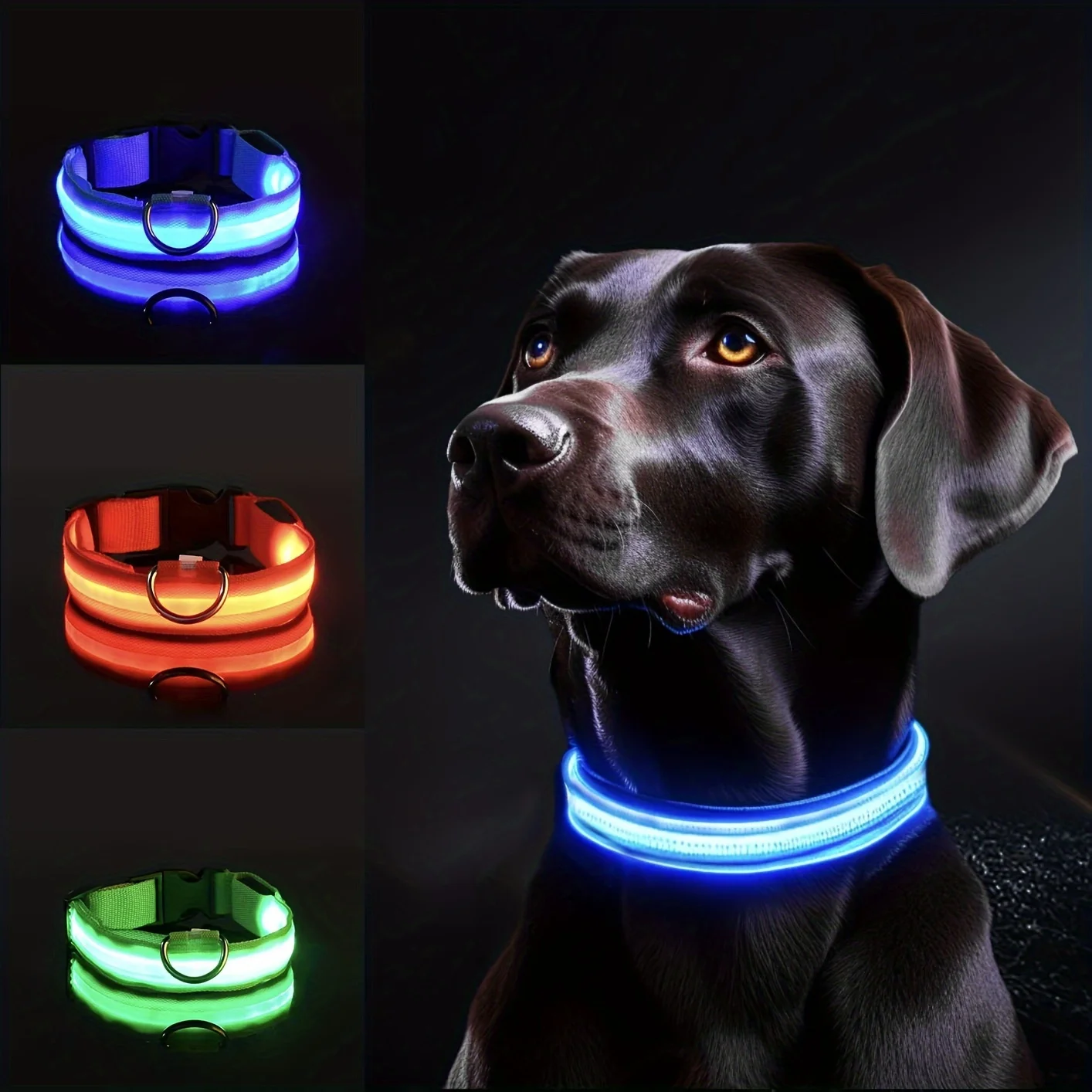
For walks in the dark, a reflective collar shines back in car headlights, and an LED collar lights up so your dog can be seen from any direction, not just in headlights. Most LED collars are charged by USB. Our LED dog collars have their own page.
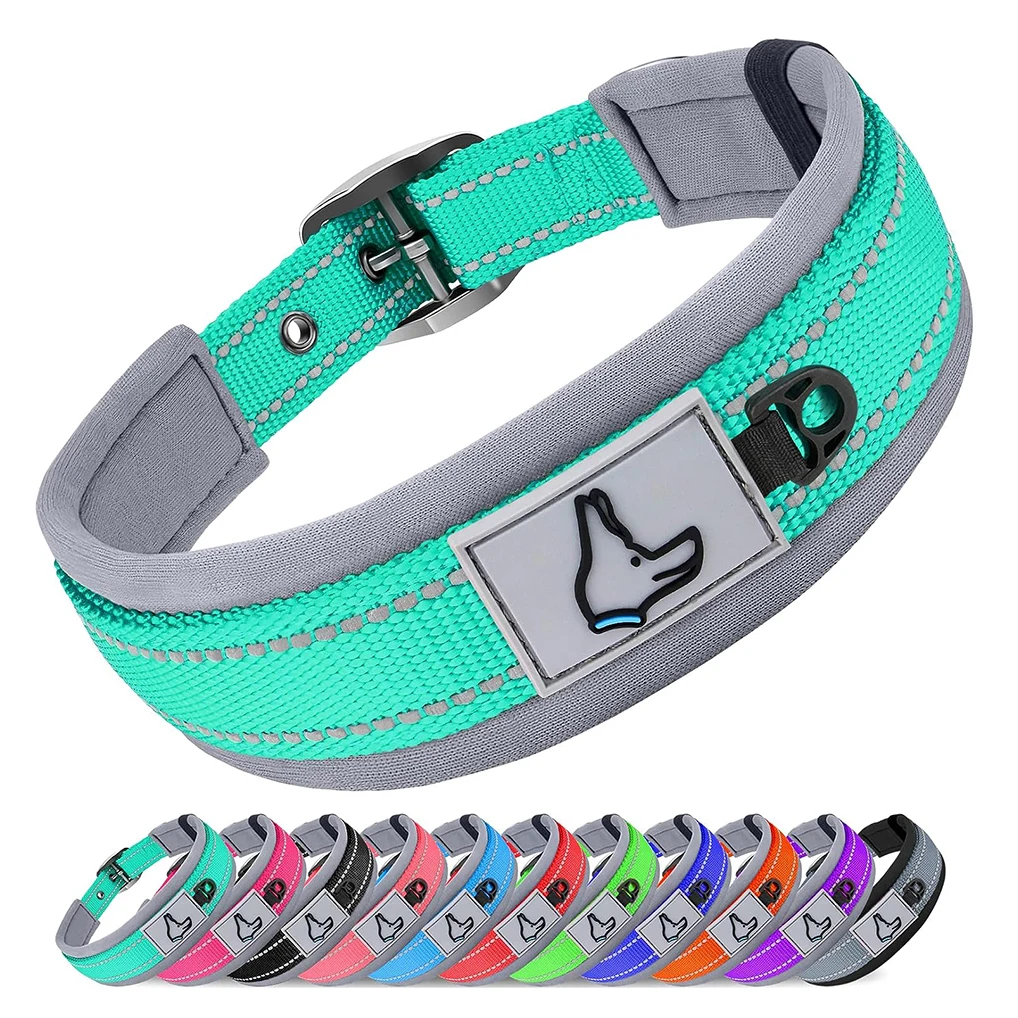
Tactical collars
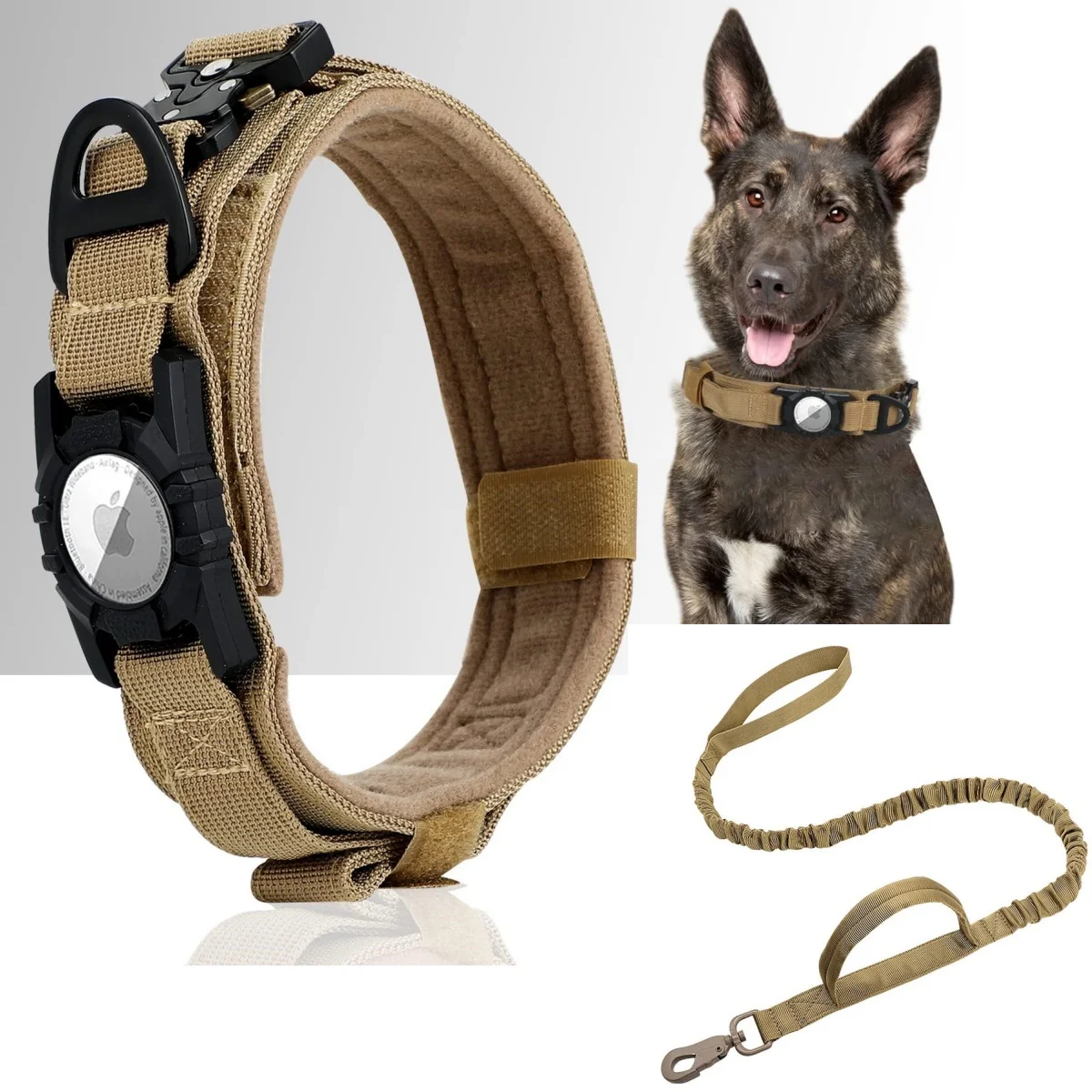
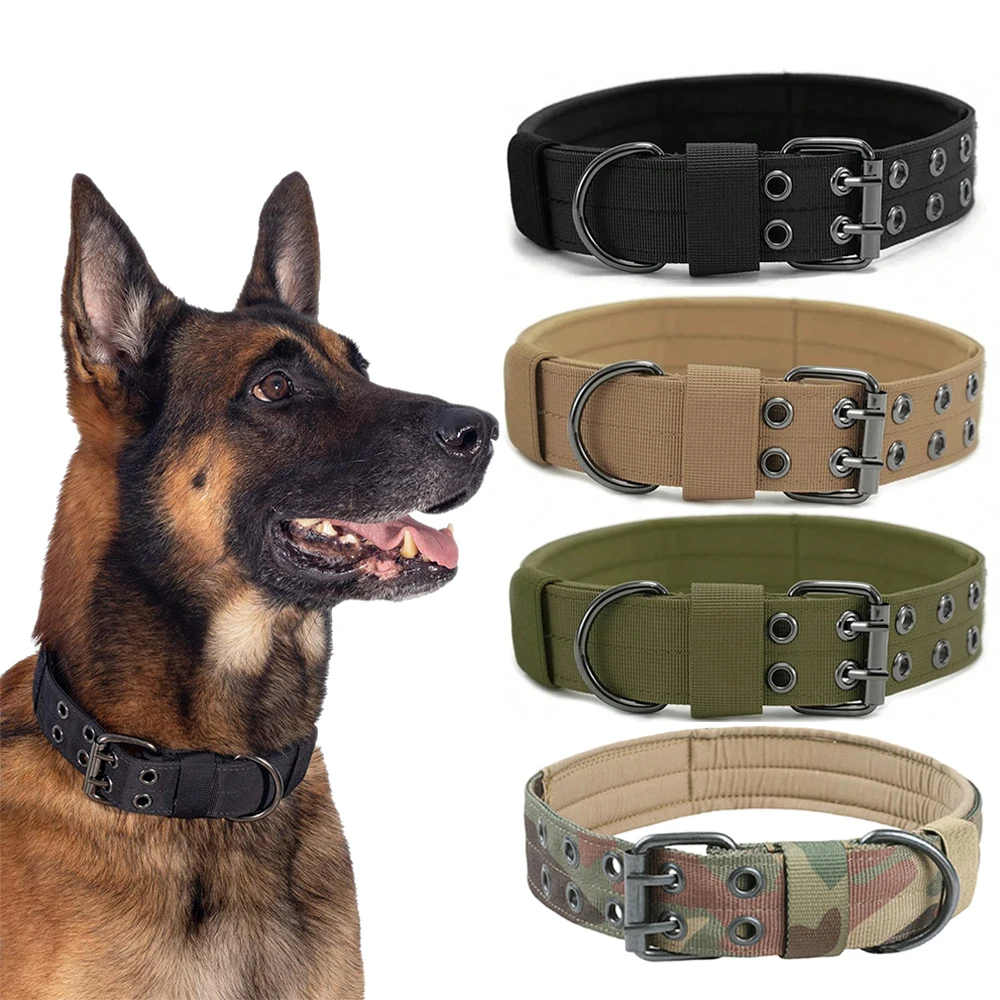
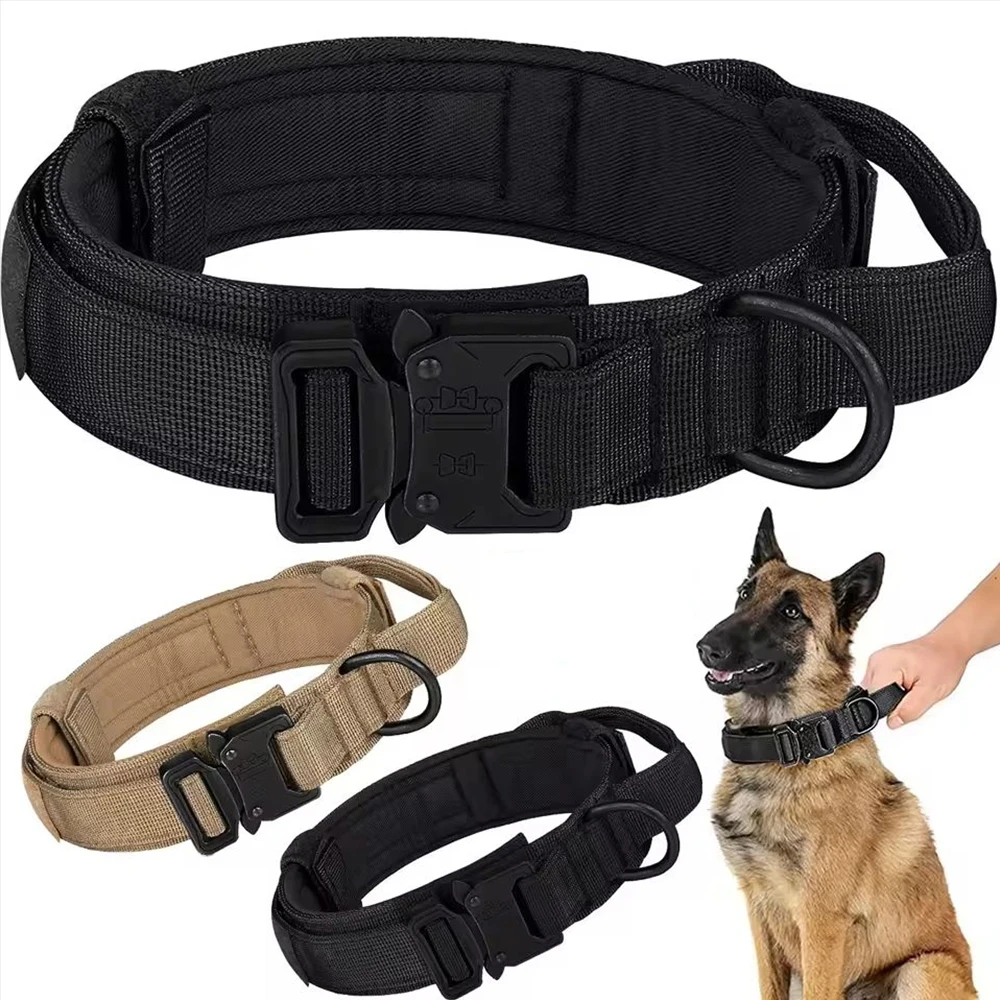
A tactical collar is a wide, heavy-duty nylon collar with a metal buckle, and often a handle on top so you can hold a big dog close. It suits strong, large breeds and working dogs.
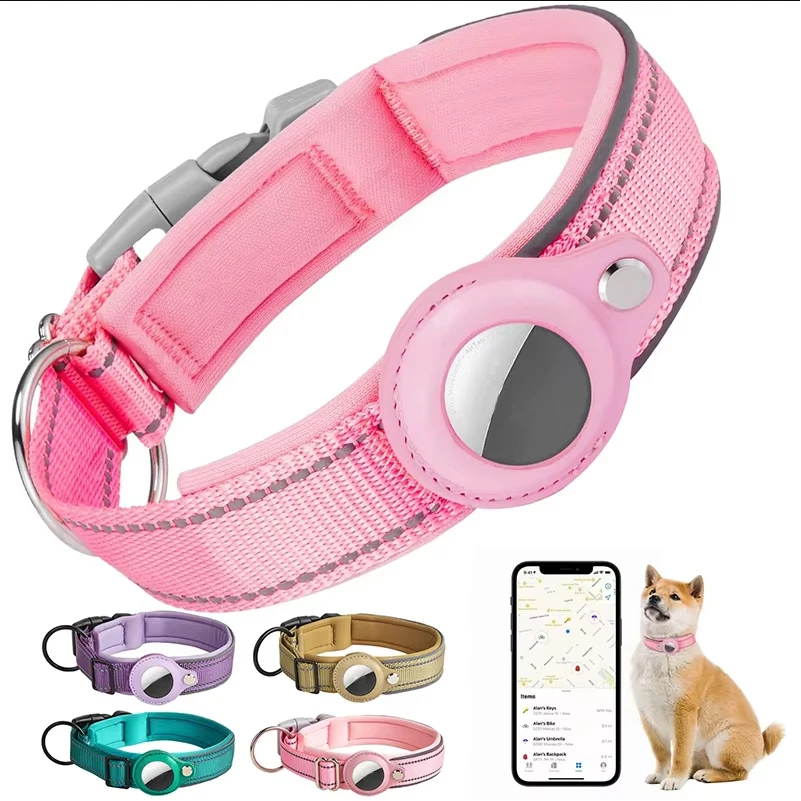
AirTag collars
An AirTag collar has a pouch or holder for an Apple AirTag, so you can see where your dog is on your phone if they get lost. The AirTag is sold separately by Apple.
Collars for small dogs and cats
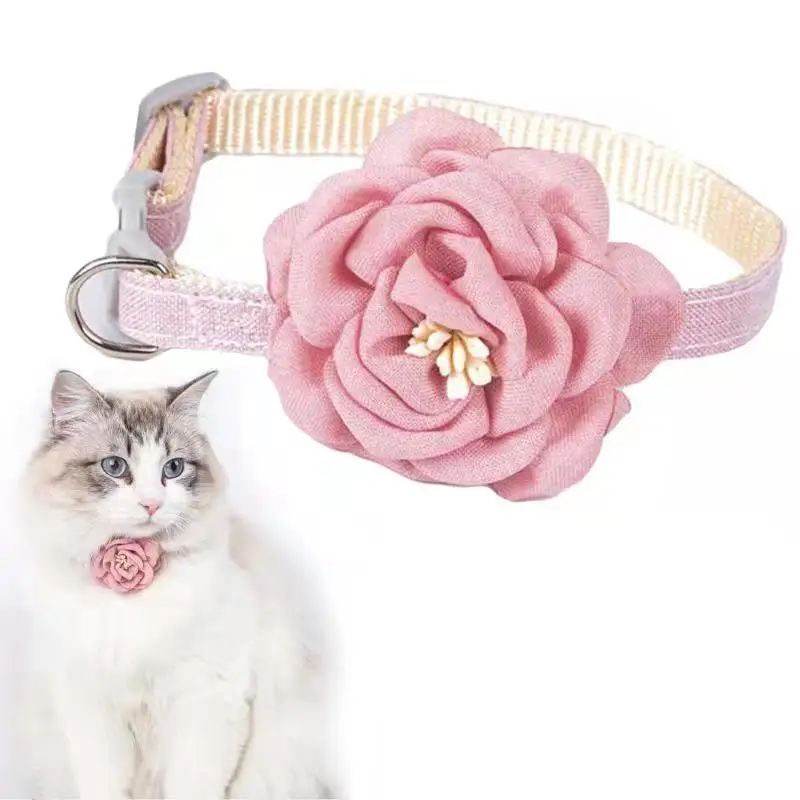
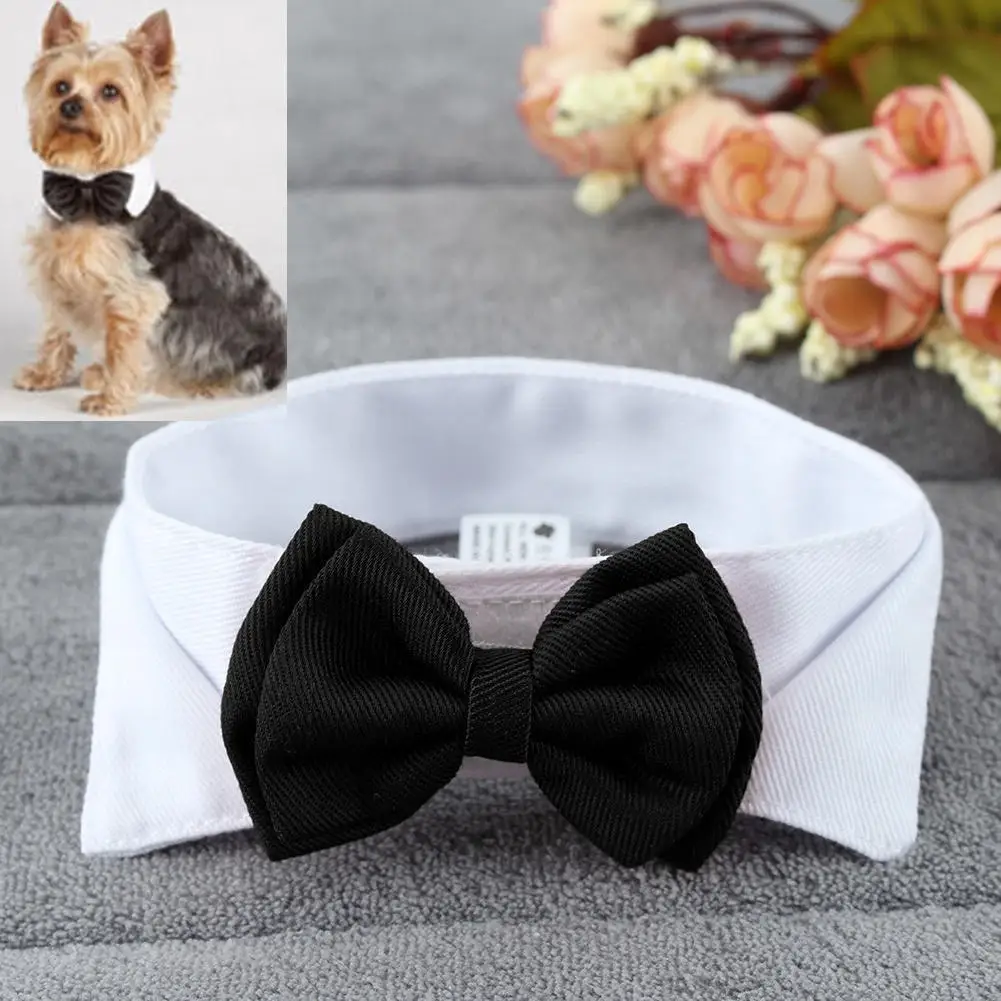
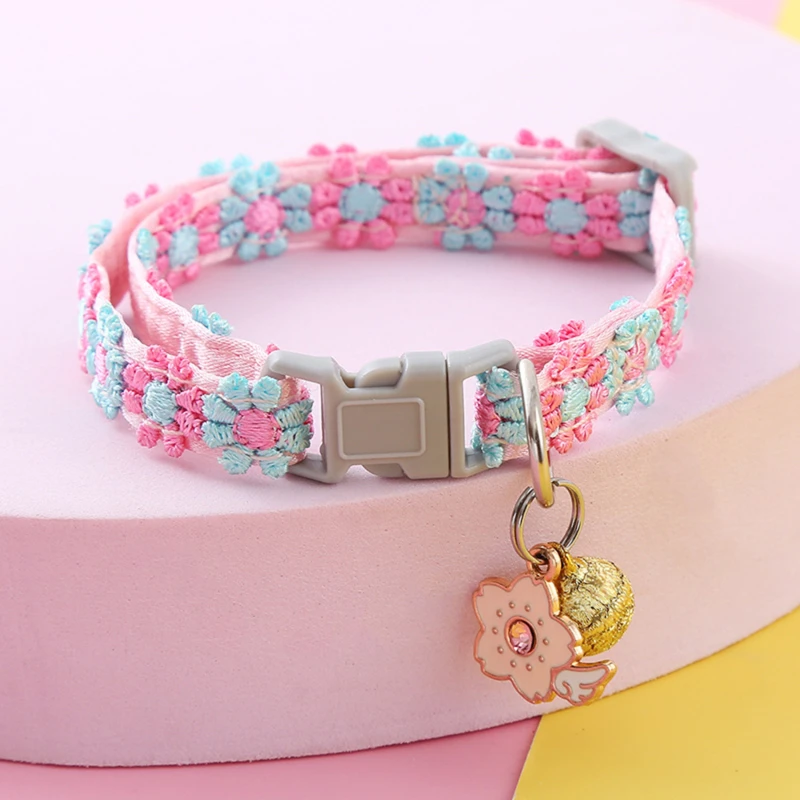
Our lighter collars, with bells, bow ties and flowers, are made for small dogs, puppies and cats, with a safety buckle on the cat collars that opens if the collar gets caught.
How to measure your dog for a collar
- Measure round your dog's neck where the collar will sit, with a soft tape measure.
- Add about 5cm for a small dog or 7cm for a large one, so the collar isn't tight.
- Check the size chart on the product page. Each collar gives the range of neck sizes it adjusts to, and sizes differ between makers.
- Choose the size where your dog's neck sits in the middle of the range, so there's room to loosen or tighten it.
When it's on, you should fit two fingers flat between the collar and your dog's neck. Too loose and your dog can slip it over their head; too tight and it rubs. Check a puppy's collar every week, because they grow fast.
Which collar for which dog?
- Puppies: a light nylon collar to get them used to wearing one. Expect to buy a bigger size within months.
- Short coats and sensitive skin: a padded collar.
- Big, strong dogs: a wide tactical collar with a metal buckle.
- Dark mornings and evenings: a reflective or LED collar.
- Dogs that run off: an AirTag collar.
- Flat-faced breeds: a collar for the ID tag, and a harness for the lead, so nothing pulls on the throat.
Collar or harness?
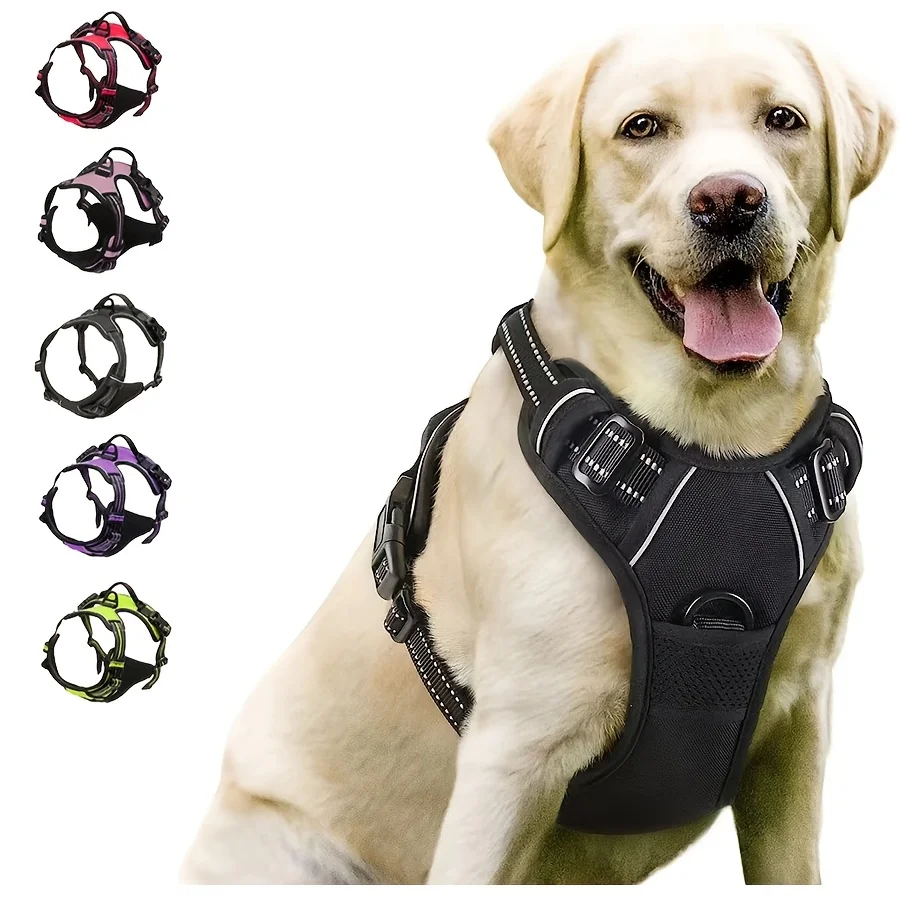
Your dog needs a collar with a tag by law. For walking on a lead, a harness is kinder for small dogs, flat-faced breeds and dogs that pull, because it takes the pressure off the neck. Many owners use both: the collar for the tag, the harness for the lead.
Looking after a dog collar
Nylon collars can be hand-washed in warm, soapy water; leather ones should be wiped clean and left to dry away from a radiator. Check the stitching and buckle every few weeks, and replace a collar that's frayed or cracked.